

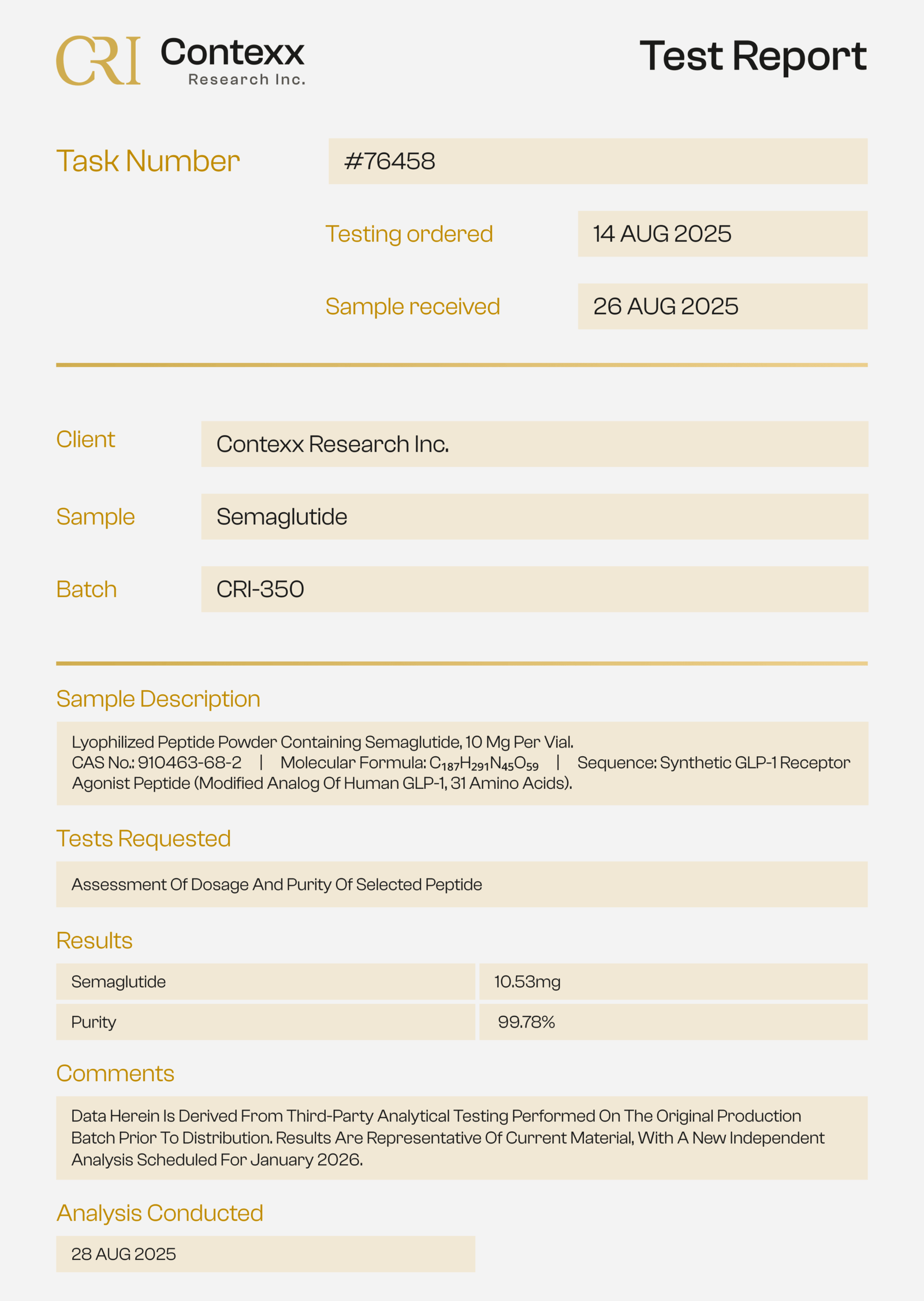

Semaglutide – GLP-1 Pathway Research Peptide
Semaglutide is a well-established metabolic research peptide widely used to study GLP-1 receptor signaling, one of the most important pathways involved in appetite regulation, glucose balance, and metabolic control. Because of its long-acting design and strong receptor selectivity, Semaglutide has become a leading tool for researchers investigating how the body manages nutrient response, energy use, and insulin-related communication.
Unlike multi-agonist peptides such as Retatrutide or Tirzepatide, Semaglutide works through a single, highly targeted mechanism: GLP-1 receptor activation
This allows researchers to isolate and study the specific effects of GLP-1 signaling without interference from other pathways. Its stability and extended activity make it ideal for observing long-duration metabolic responses under controlled conditions.
In laboratory studies, Semaglutide is commonly examined for:
-
Appetite-related hormone signaling
-
Gastric emptying and nutrient-timing models
-
Glucose regulation and insulin response pathways
-
Energy balance and calorie-intake behavior
-
Differences between short-acting and long-acting GLP-1 analogues
-
Receptor-specific comparisons with dual and tri-agonist peptides

Reviews
There are no reviews yet.